

The 2026 Invasive Species and Climate Change Symposium was organized and hosted by the Northeast Regional Invasive Species and Climate Change (NE RISCC) Network. The event was a tremendous success, welcoming over 250 attendees from 4 countries and 2 continents.
This year’s symposium spanned two days and included a plenary presentation and 7 sessions featuring 24 speakers across 19 talks (most of which are available as recordings below). A variety of topics were presented related to the intersection of climate change and invasive species. This remove event brought together natural resource managers, practitioners, researchers, and students to network, share knowledge and practice, and advance translational invasion ecology.
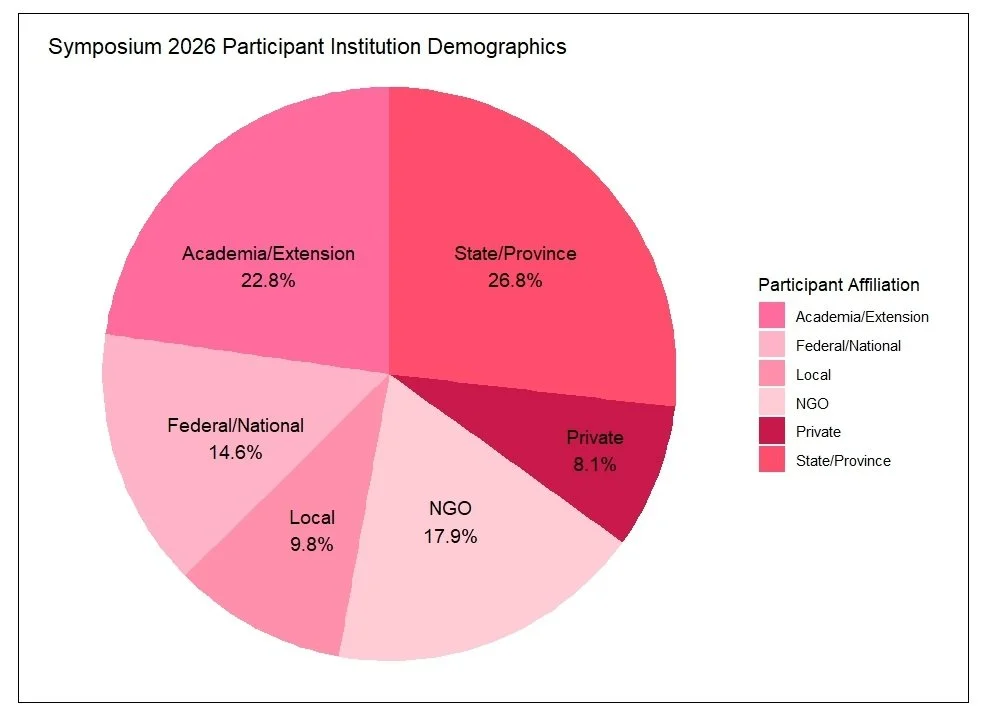
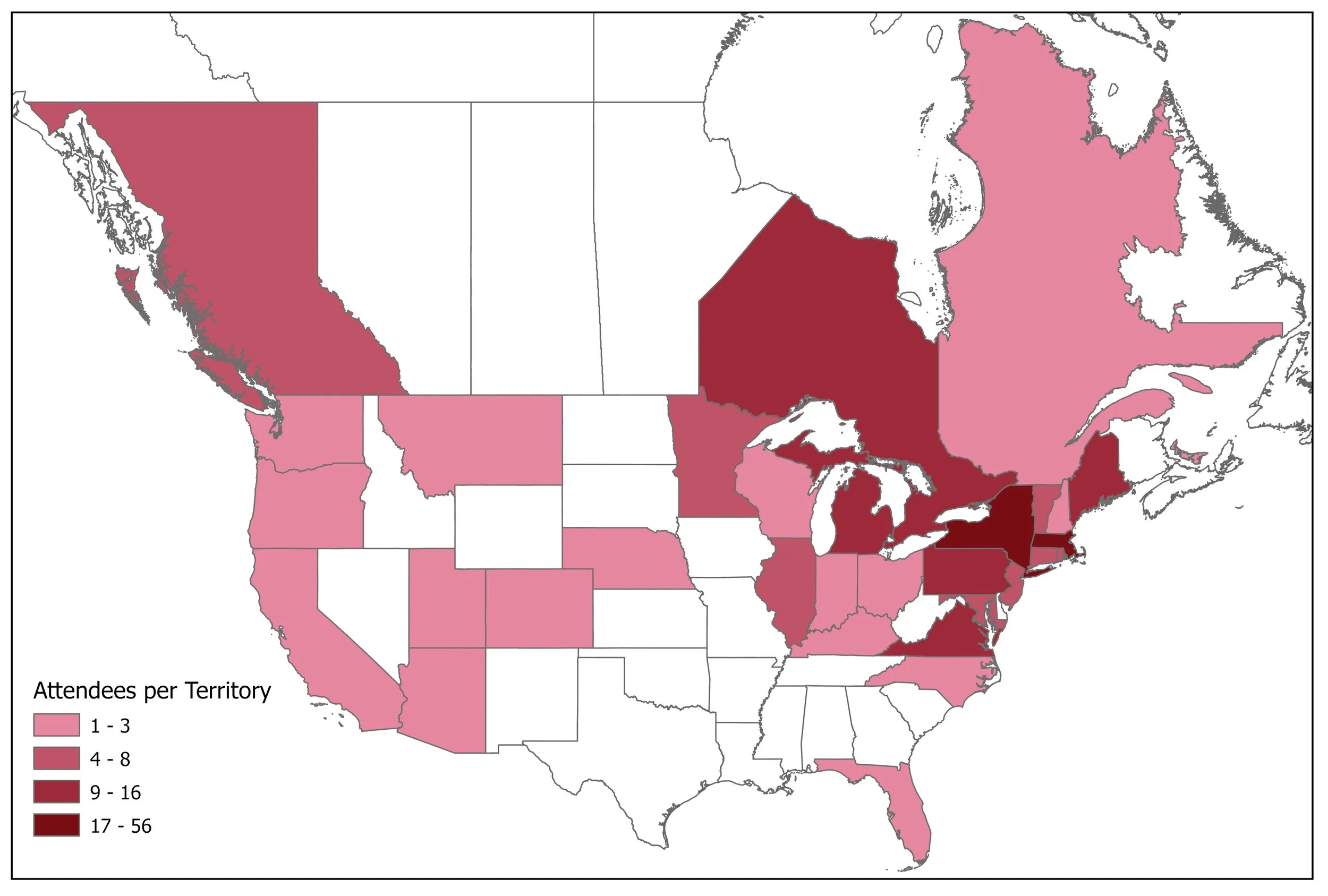
Attendees came from a wide range of backgrounds and affiliations, with participants joining from across the region. Demographic breakdown and geographic distribution of attendees are displayed above.
See you next year!
Agenda
Opening Remarks (Day 1)
Begins: 5:51
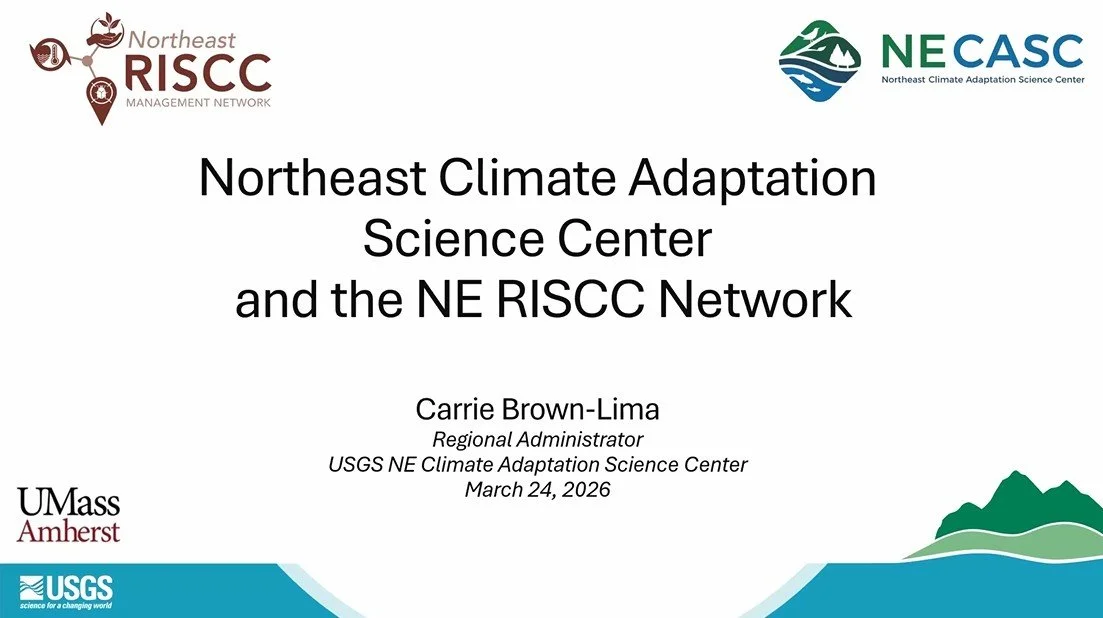
Day 1 began with a presentation by Carrie Brown-Lima (Northeast Climate Adaptation Science Center), one of the co-founders of the Northeast Regional Invasive Species and Climate Change (NE RISCC) Network.
Plenary Presentation
Jesse Wheeler (Acadia National Park) and Chris Nadeau (Schoodic Institute)
Talk Begins: 18:25
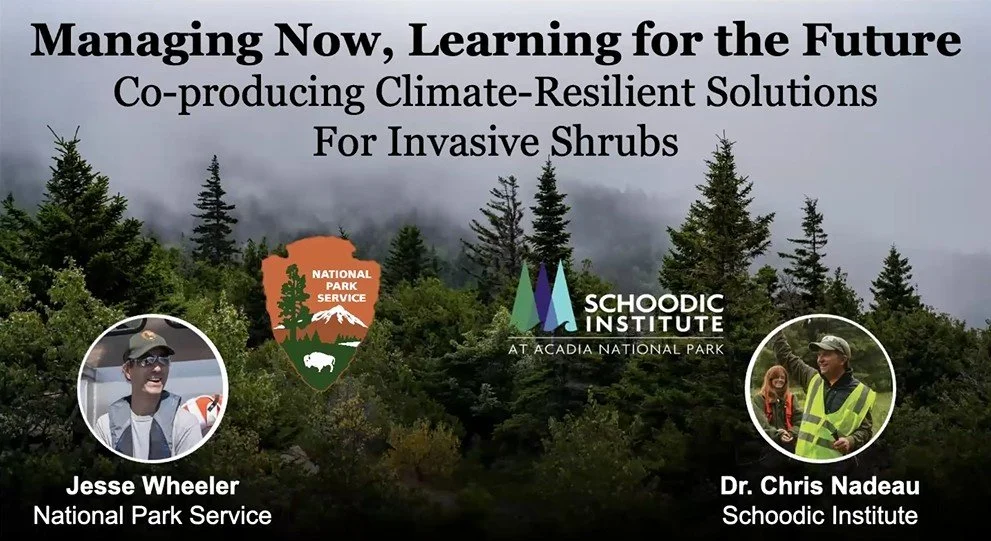
Managing Now, Learning for the Future: Co-Producing Climate-Resilient Solutions for Invasive Shrubs
After completing his degree at Antioch University, Jesse Wheeler started his career at the National Park Service (NPS). As the vegetation and program manager at Acadia National Park, Jesse is responsible for overseeing programs that protect and restore the Park’s natural ecosystems.
Chris Nadeau completed his graduate degrees at Cornell University and the University of Connecticut before joining the Schoodic Institute. As Climate Change Adaptation Scientist, Chris studies how to adapt natural resource management practices to climate change.
Together, Jesse and Chris bring over three decades of experience in natural resource management and climate science, offering invaluable perspectives to the 2026 Annual Northeast RISCC Symposium.
Session #1: Collaboration in Action – Case Studies in Successful Partnerships
Session Begins: 1:17:16
This session featured the following speakers:
Doug Jensen (Minnesota Department of Natural Resources), “Minnesota Has a Compelling Story of Success in AIS Prevention” (starts 1:18:20)
Mike Littman (Loudon Invasive Removal Alliance), “Roots of Change: When Citizens and County Government Grow Solutions Together” (starts 1:41:46)
Shikha Singh (JLW CISMA), “Fellowship of the Fields: Creating Partnerships To Address Invasive Species Needs” (starts 2:02:46)
Session #2: Discussions on Managing Invasives in a Changing Climate
Session Begins: 2:29:09
This session featured short presentations by the panelists below, followed by a discussion and audience Q&A session.
Eva Colberg (Northwest Climate Adaptation Science Center & Climate Impacts Group, University of Washington)
Matt Brincka (New York Office of Parks, Recreation, and Historic Preservation)
Michael Schwarz (Virginia Seafood Agricultural Research and Extension Center)
Session #3: Prevention Approaches to Invasive Species Under Climate Change
Session Begins: 3:35:57
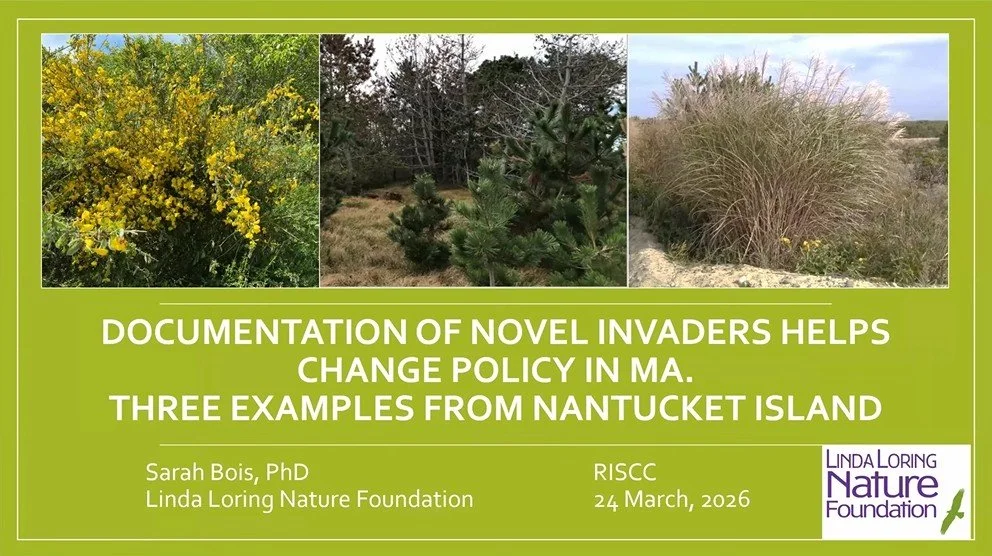
This session featured the following speakers:
Sarah Bois (Linda Loring Nature Foundation), “Documentation of novel invaders helps change policy in Massachusetts. Three examples from Nantucket Island” (starts 3:35:57)
Diana Albuja (Penn State University), “Native Plant Functional Traits Influencing the Early Growth of Japanese Barberry in Eastern Deciduous Forests” (starts 3:58:29)
Closing Remarks (Day 1)
Begins: 4:18:01
Day 1 ended with closing remarks from Bethany Bradley (University of Massachusetts Amherst), where she highlighted some positive news in the world of invasive species management.
Opening Remarks (Day 2)
Begins: 1:30
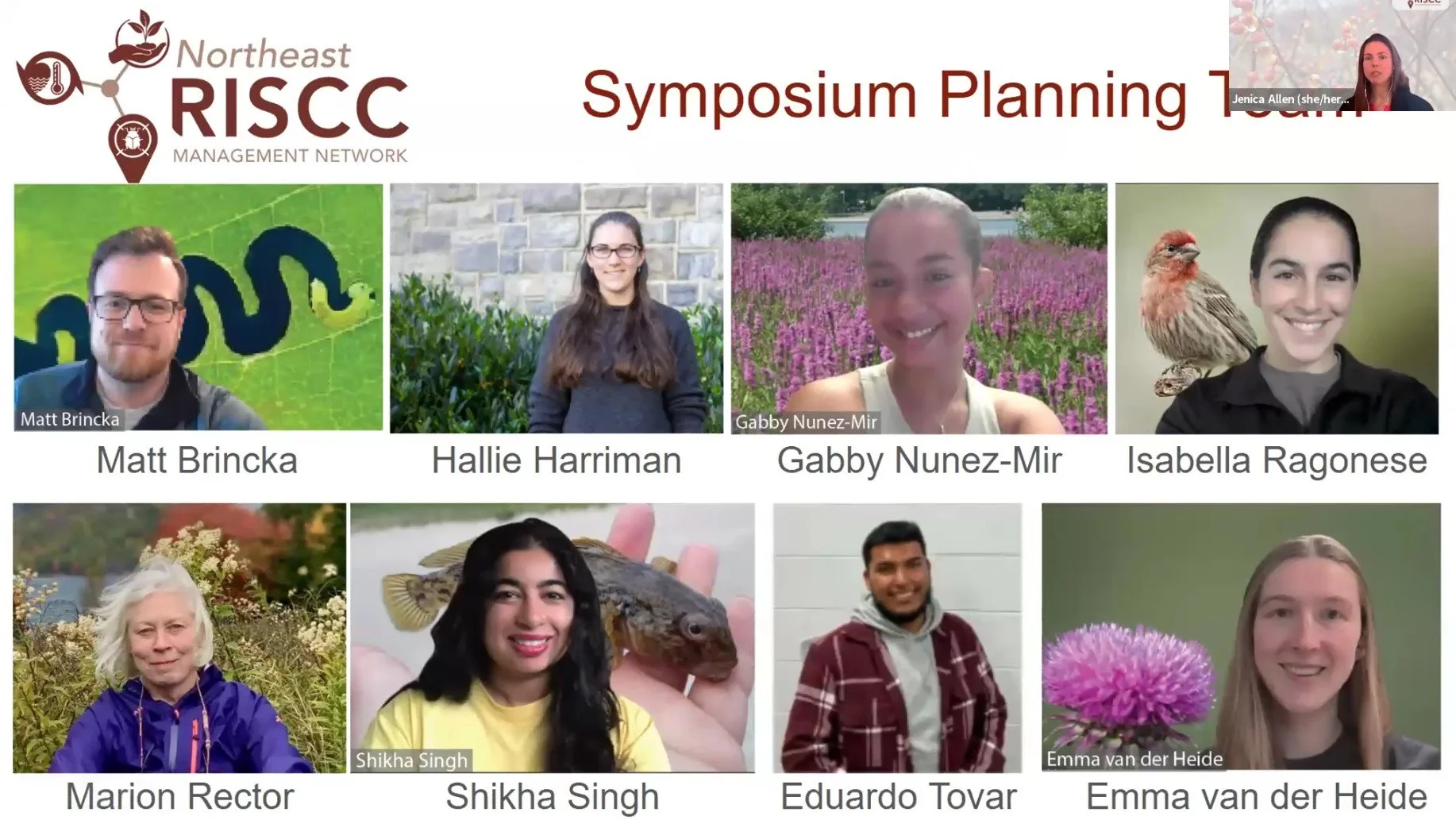
Day 2 began with an overview of the first day of the Symposium and an introduction to the Northeast Regional Invasive Species and Climate Change (NE RISCC) Network by Director Jenica Allen.
Session #4: Tools for Invasive Species Management in a Changing Climate
Session Begins: 13:54
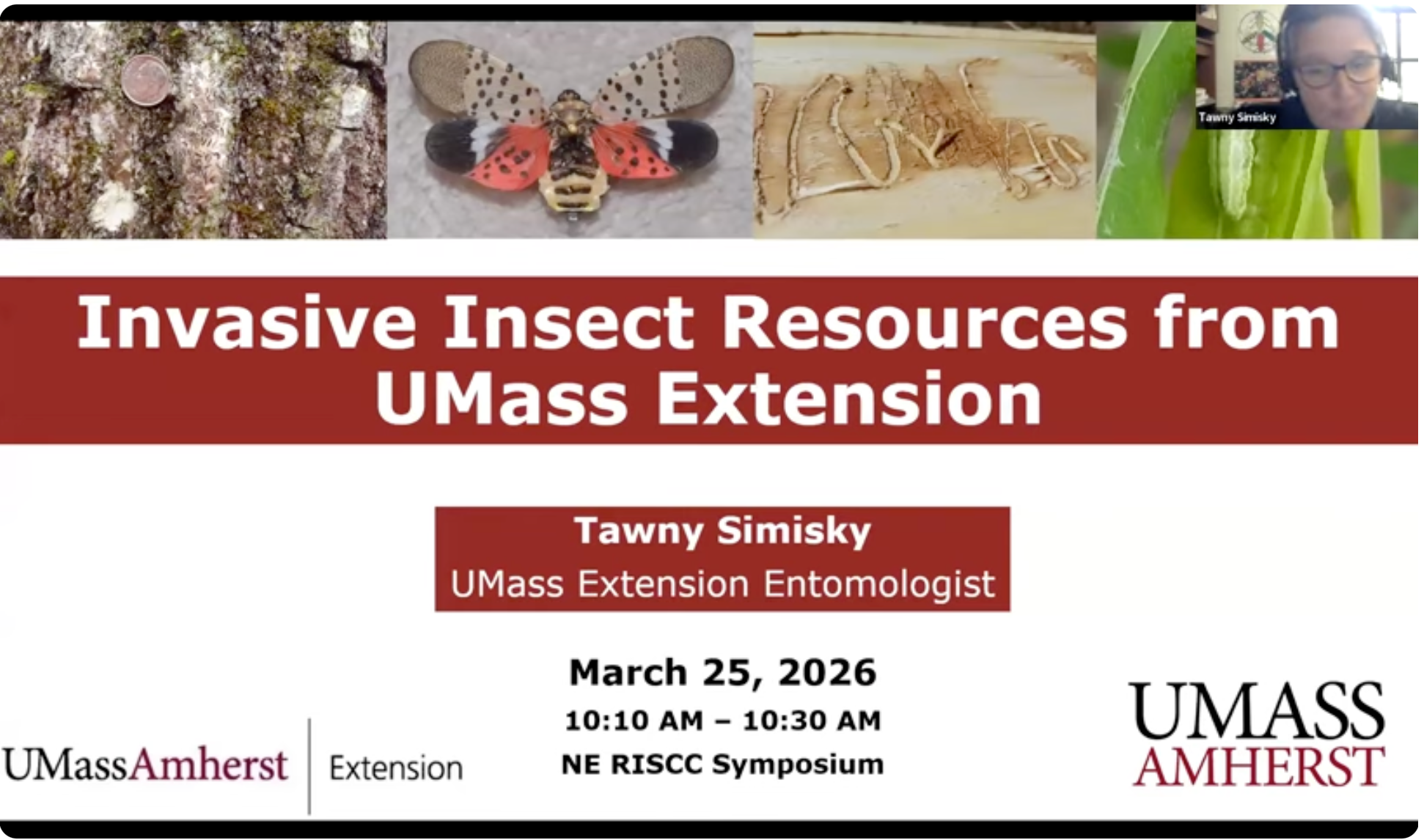
This session featured the following speakers:
Tawny Simisky (University of Massachusetts Amherst), “Invasive Insect Resources from UMass Extension” (starts 15:05)
Natalie Umphlett (Cornell University), “Forest Climate Indicators: Enhancing Forest Health Decision-making with a New Suite of Tools” (unrecorded)
Winslow Robinson (Fable Forestry), “Naughtweed: Making Invasive Species Management Easier to Do” (starts 31:36)
Session #5: New NE RISCC Tools: Context and Demonstration
Session Begins: 52:17
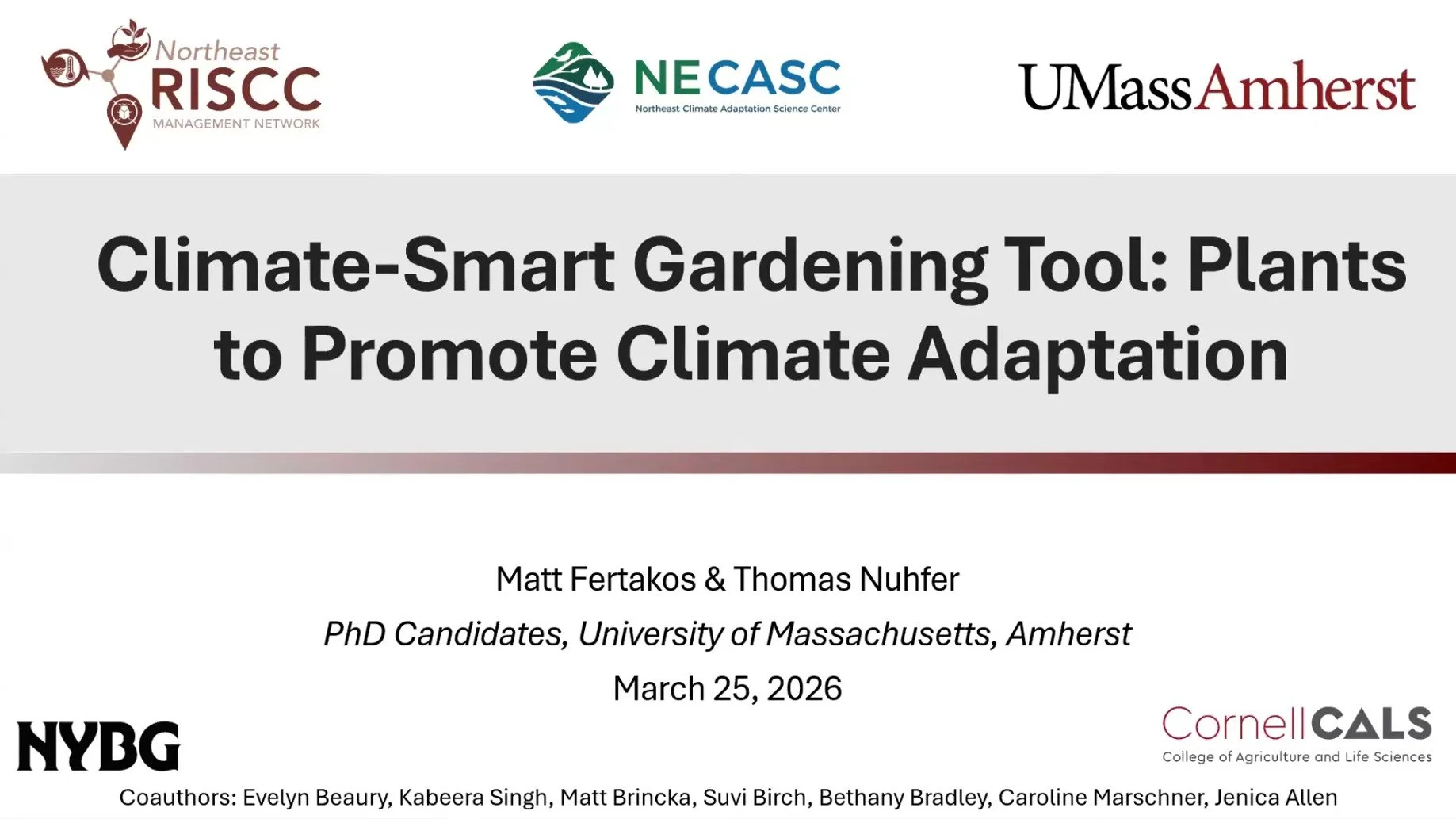
This session featured the following speakers:
Matt Fertakos and Thomas Nuhfer (University of Massachusetts Amherst), “Climate-Smart Plant Selection Tool” (starts 52:54)
Bethany Bradley (University of Massachusetts Amherst), “Visualizing state invasive plant regulations with RISCCTools” (starts 1:17:09)
Session #6: Emerging Issues
Session Begins: 1:44:30
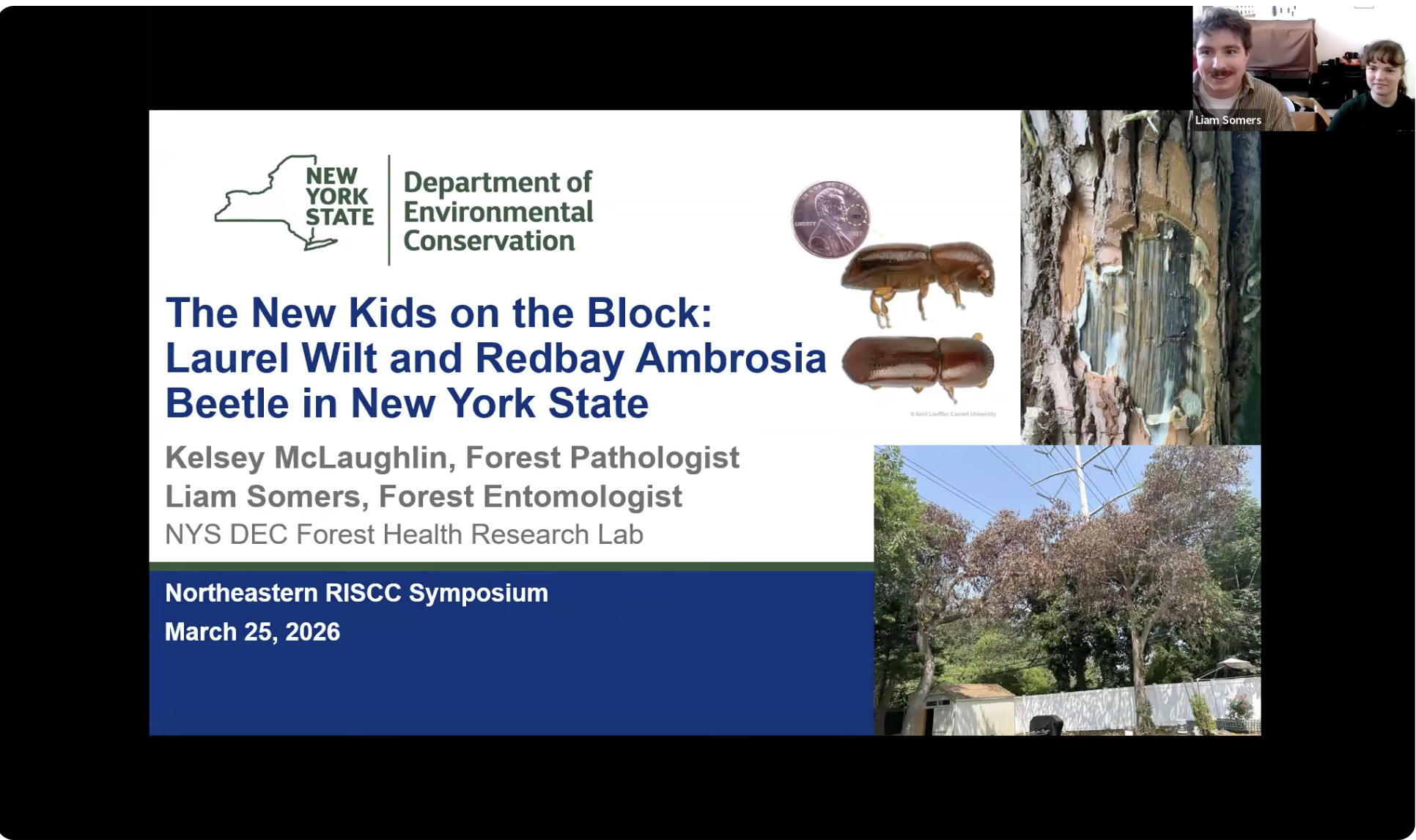
This session featured talks by:
Kelsey McLaughlin and Liam Somers (NYS Department of Environmental Conservation), “The New Kids on the Block: Laurel Wilt and Redbay Ambrosia Beetle in New York State” (starts at 1:44:41)
David Wong (Massachusetts Department of Environmental Protection), “Recent Invasive Plants to Massachusetts Freshwaters are Tropical or Subtropical Species” (starts at 2:03:17)
Nicholas Stevenson (National Park Service), “New and Emerging Invasive Plants in the Northeast: Insights from a Regional Management Team” (starts at 2:17:19)
Aly Putnam (University of Massachusetts Amherst & Boston), “Recent Detection and Establishment of the Manila Clam (Ruditapes philippinarum) in New England” (starts at 2:27:21)
Session #7: Breaking Research
Session Begins: 2:47:38
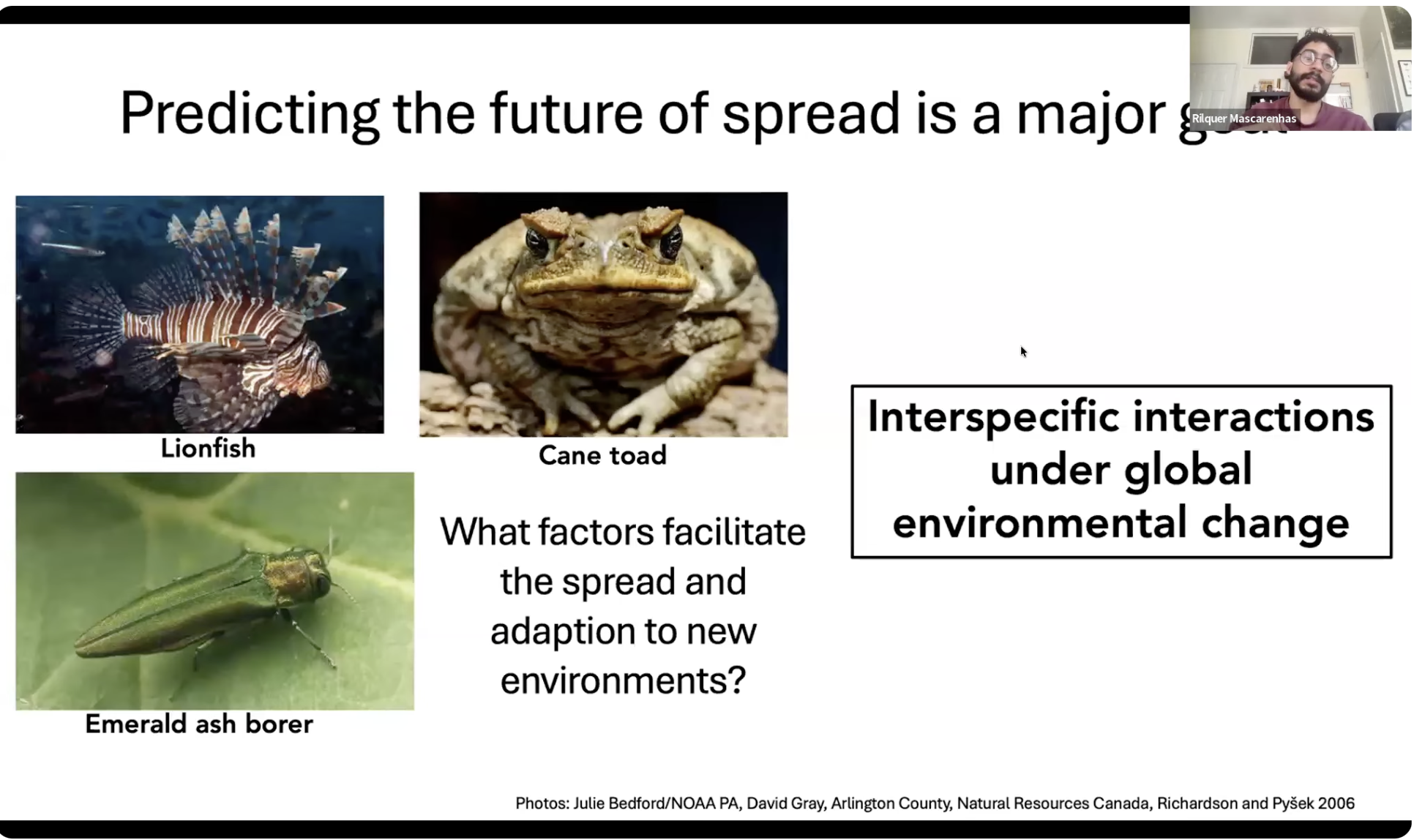
This session featured talks by:
Briante Najev (University of Pittsburgh), “High temperatures can increase growth rate in Potamopyrgus antipodarum (New Zealand mud snail) regardless of phosphorus diet” (unrecorded)
Rilquer Mascarenhas (City University of New York, York College), “Testing co-invasion and predicting future spread through population genomics of the brown widow spider and its egg sac parasitoid” (recording starts at 2:47:38)
Joaquin Nunez (University of Vermont), “Phenotypic and Genomic Evidence of Adaptive Tracking in Wild Populations of an invasive Drosophila (fruit fly)” (starts at 2:58:11)
NE RISCC Impact Award
Award Begins: 3:07:38
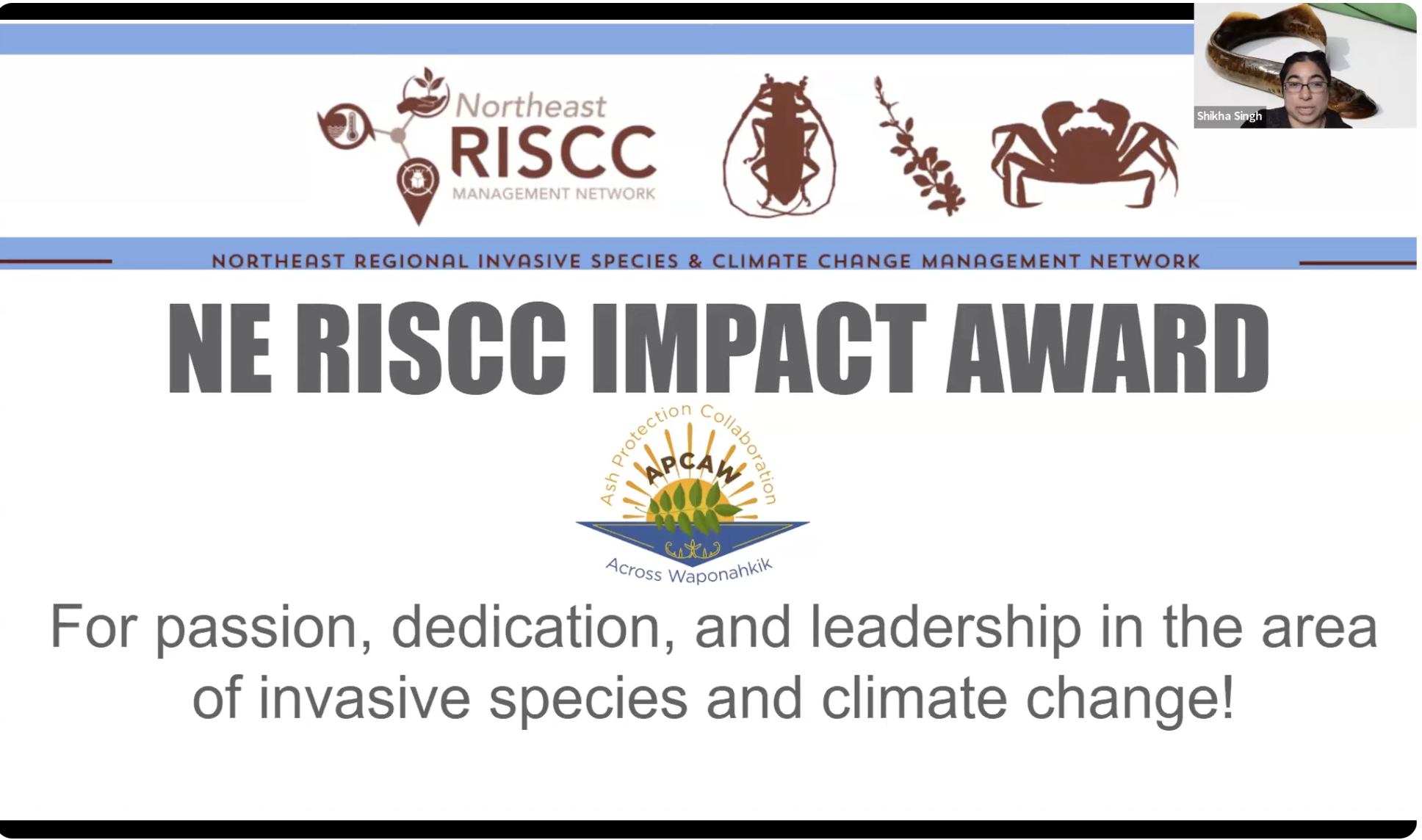
The NE RISCC Impact Award recognizes an individual or organization that has demonstrated passion, dedication, and leadership around invasive species and climate change in the Northeast.
This year's recipient of the NE RISCC Impact Award went to the Ash Protection Collaboration Across Waponahkik for their leadership on Indigenous-led research, outreach, and partnerships has been instrumental in protecting brown ash across the Waponahkik land. The award was graciously accepted on the group's behalf by Professor John Daigle who also said a few words about their efforts.
Closing Remarks (Day 2)
Begins: 3:15:09
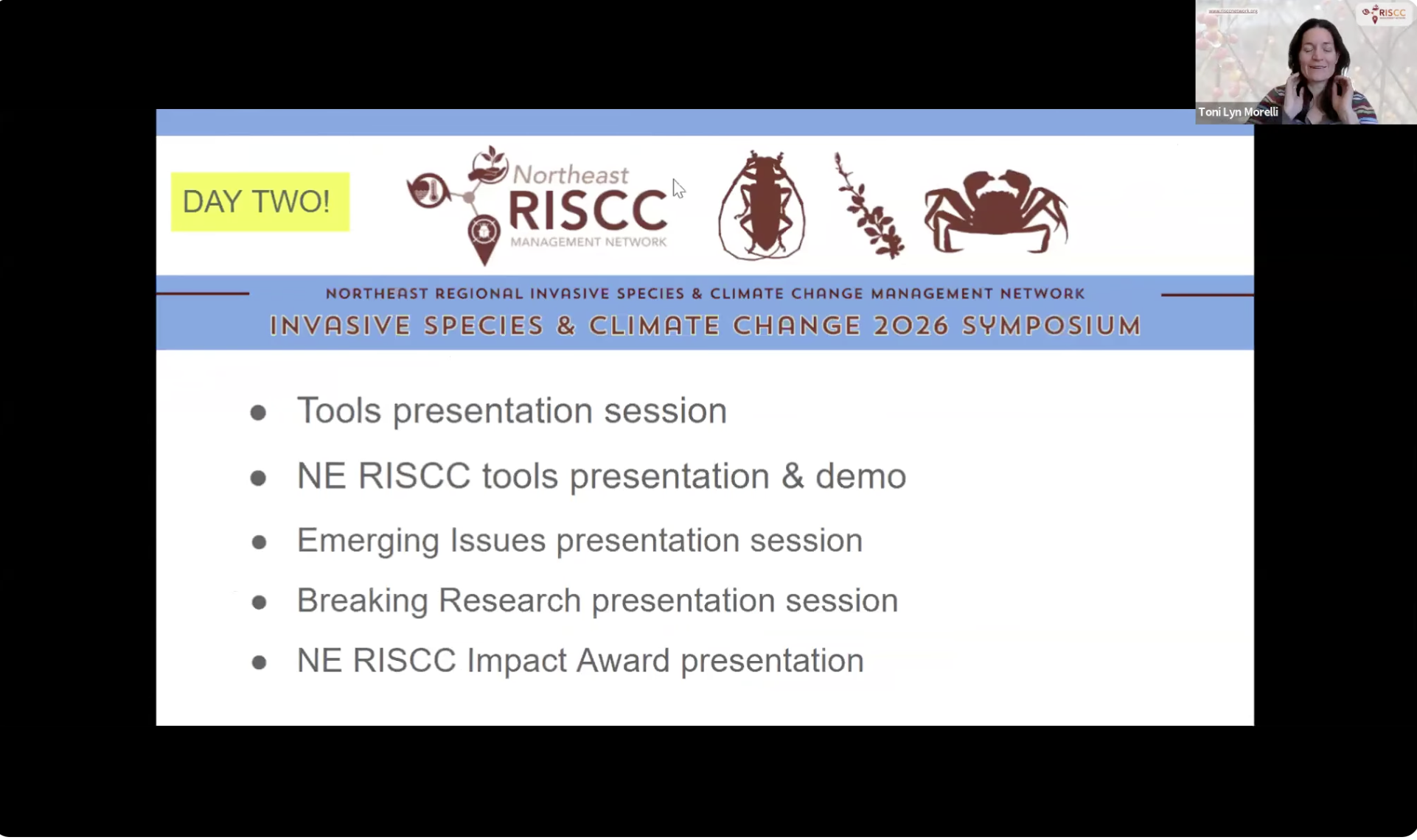
Day 2 ended with closing remarks by Toni Lyn Morelli (Northeast RISCC, Northeast Climate Adaptation Science Center), one of the co-founders of the Northeast Regional Invasive Species and Climate Change (NE RISCC) Network.