
RISCC Curated Collection: KNOTWEED
Based on the below resources created with, through, or by the Northeast’s RISCC,
the following implications can be seen:
-
Prioritize control of plants adjacent to networks of spread, such as roads and waterways
Minimize creation of propagules. Cut stems and dug up rhizomes need to be tracked, to ensure no new spread
Every individual patch can be thought of as an Early Detection and Rapid Response opportunity, since the primary means of knotweed dispersal is human or flood mediated spreading of plant fragments
-
The scope, scale, and means by which knotweed stands have increased rates of erosion along waterways is unknown
After knotweed management activities commence, the way to heal the soil and floral community is unclear
-
Preventing the establishment and/or spread of knotweed stands along waterways will make bridges, culverts, and other infrastructure more resilient to flooding, since their supporting soils are less likely to wash away without knotweed growing nearby
Preventing the establishment and/or spread of knotweed stands along waterways will make riparian ecosystems more resilient to flooding, for the same reasons
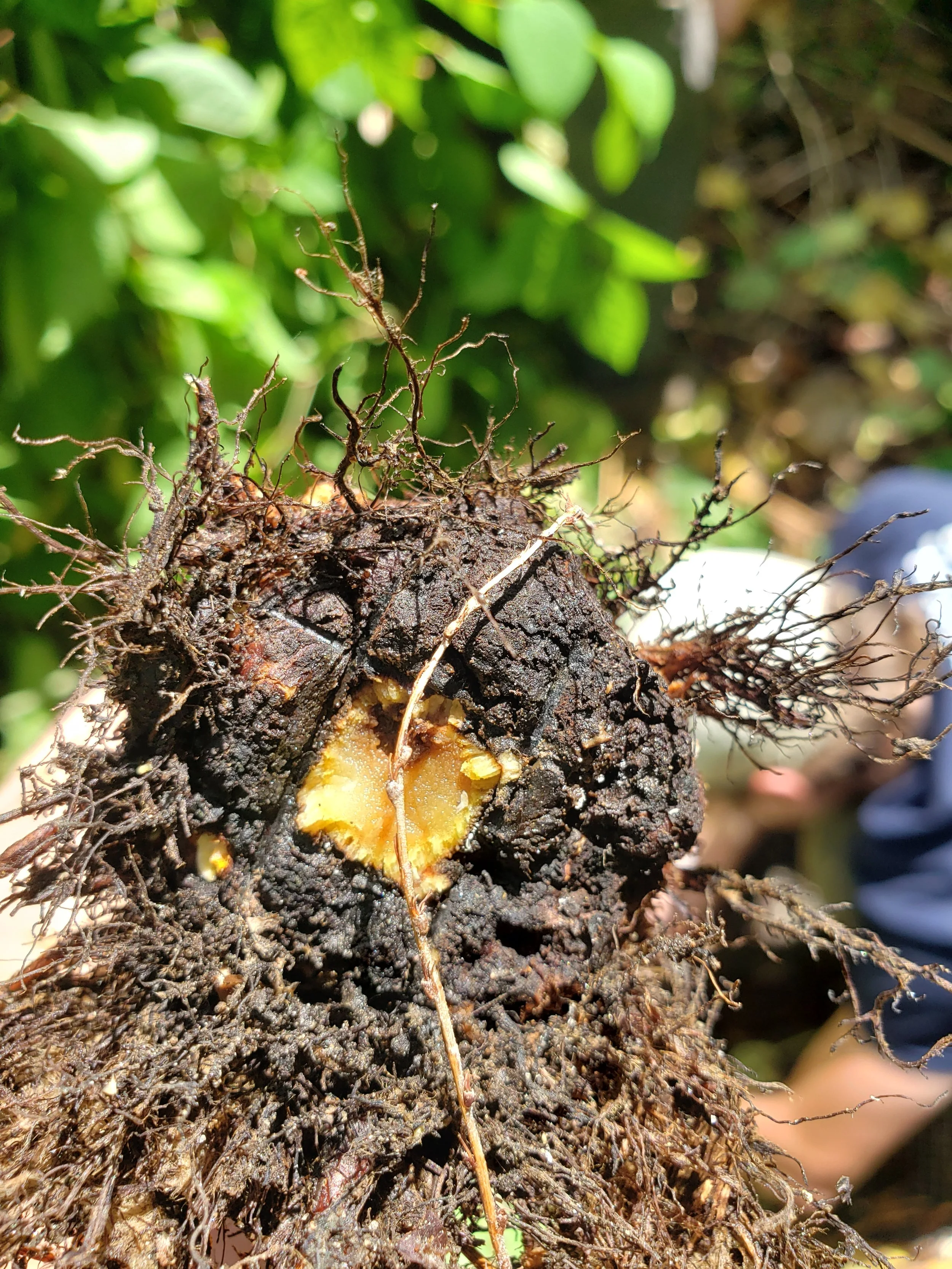
A knotweed that grew through, and then back over, wire mesh meant to girdle it. The marks of the wire mesh can still be seen.
Recordings
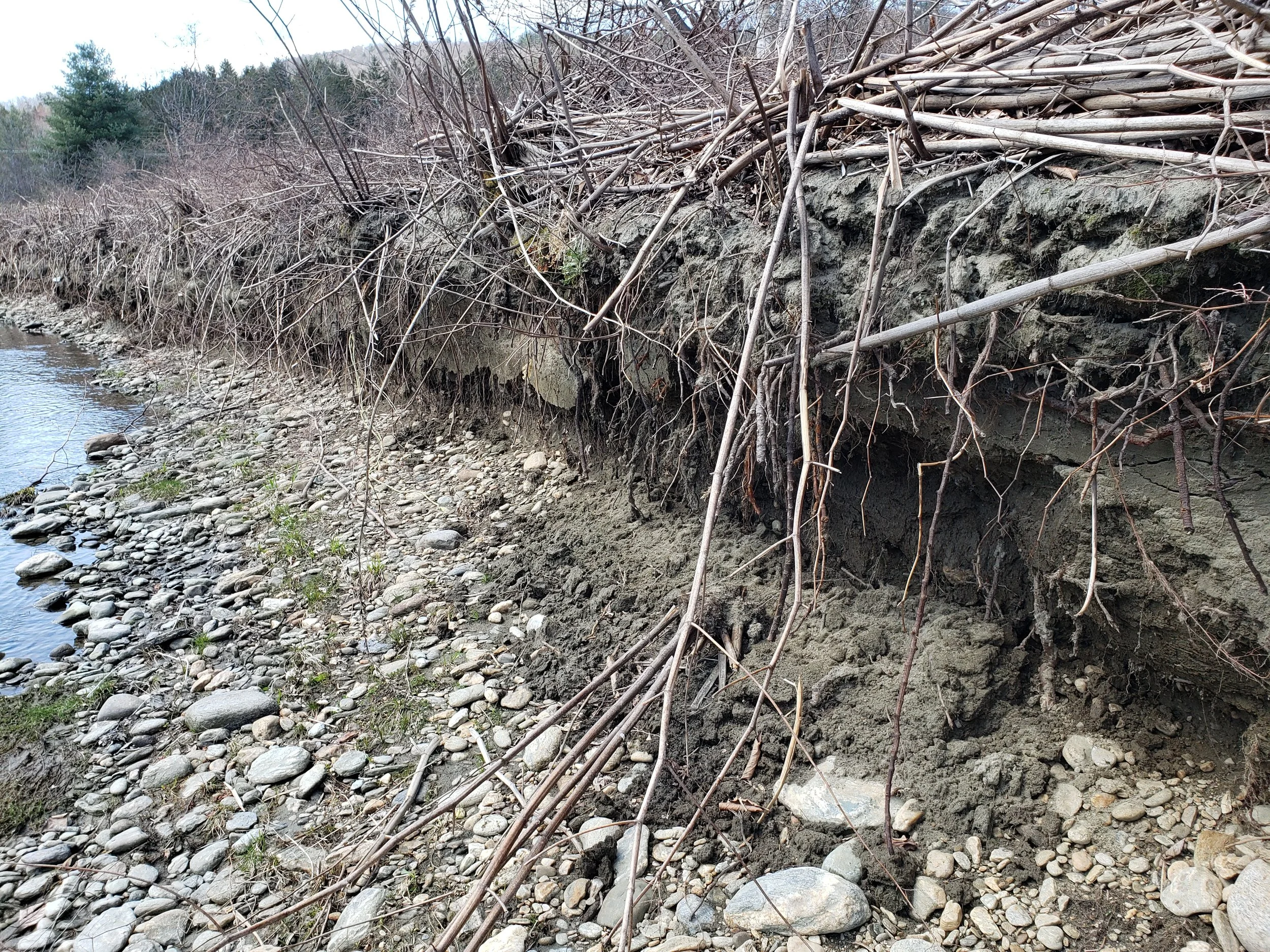
A section of the Mad River in Vermont with only Itadori knotweed, showing an eroding and undercut bank, which is a major process that leads to the spread of this plant.
-
On June 12, 2024 researcher and practitioner Brian Colleran and Élisabeth Groeneveld shared their perspectives on managing invasive knotweeds (primarily Itadori knotweed, Reynoutria japonica) in a changing climate and answered questions from the audience. They focused on shifts in hydrological regimes towards more frequent and severe storm events in response to climate change, positive feedback loops may develop between existing knotweed populations, sudden riverbank failure, and increased flood-related damage. Mindful action to control these plants is therefore a climate resiliency opportunity.
-
Brian Colleran presents on a recent publication that brings together the state of the science that links this group of invsive plants with a poorly understood impact of their presence on roadways and waterways.
From the 2021 RISCC Symposium’s Lighting Talks
-
Mar Williams presented on her undergraduate thesis work at the University of Vermont, examining how the state of knotweed infested soil influences efforts to bring back native riparian vegetation
Research Summaries
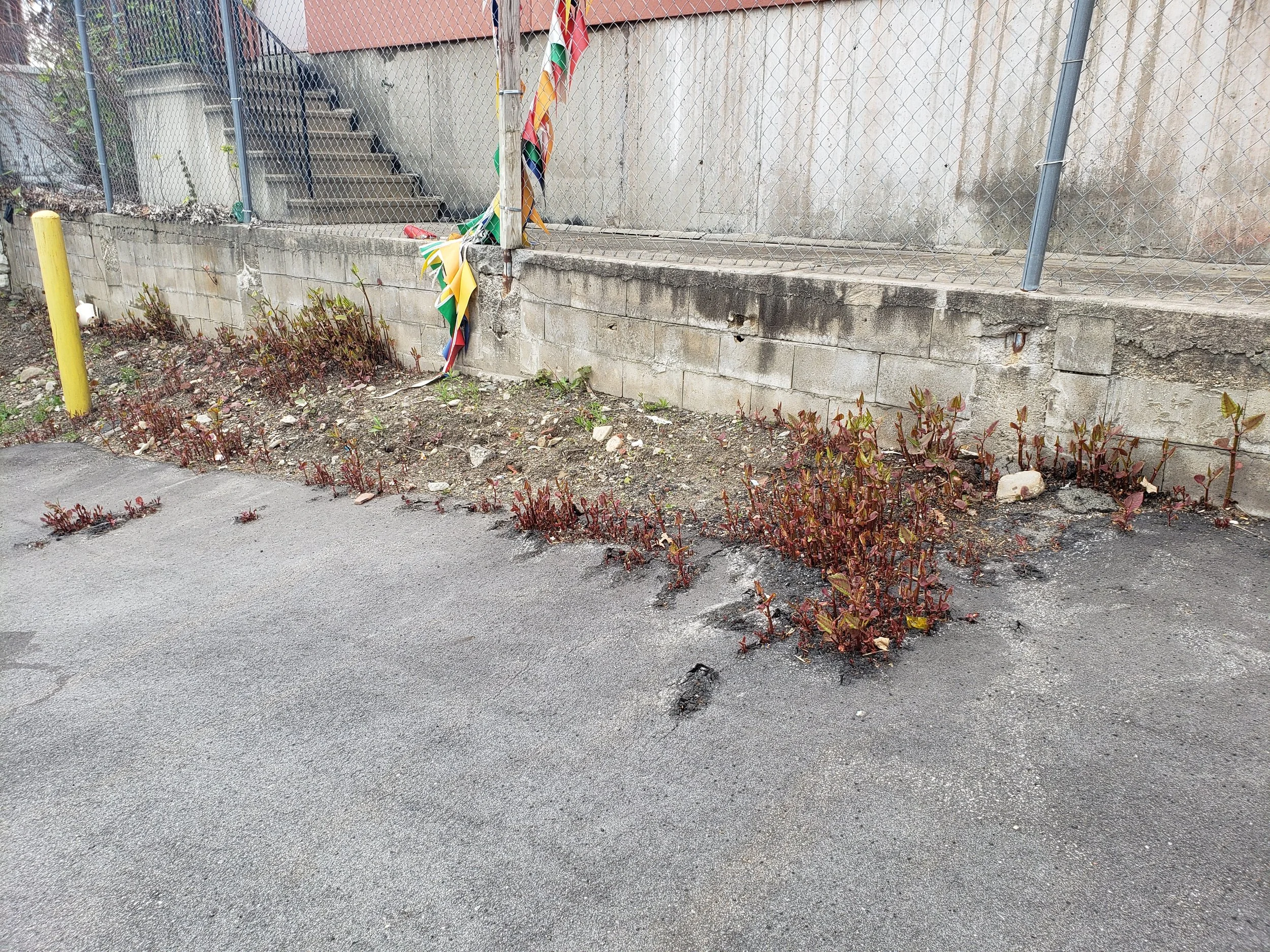
Knotweed happily growing through several kinds of concrete and asphalt in a parking lot in Worcester, MA